Start with work geometry
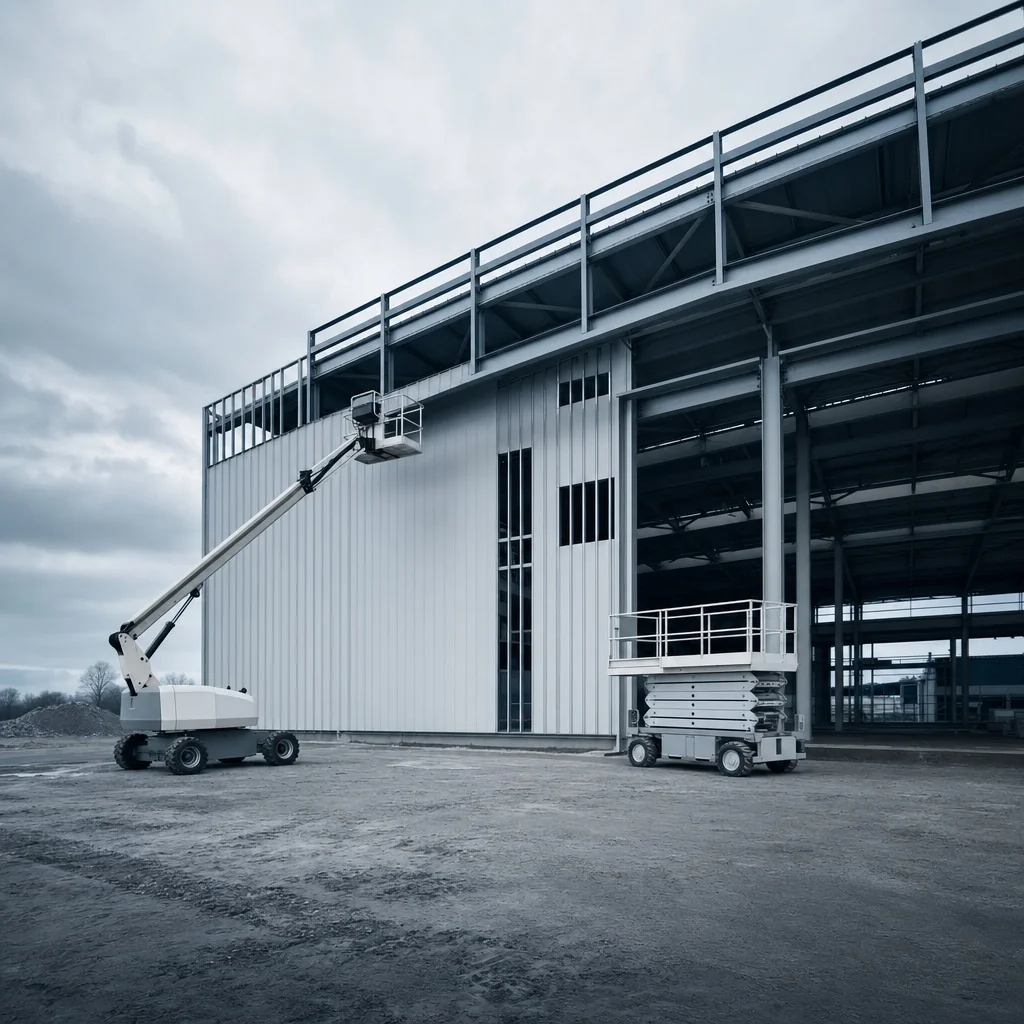
- Can the machine sit directly below the task? Scissor lifts go straight up; boom lifts bridge over obstacles. If the lift must offset around equipment or landscaping, compare options at /aerial-lift-rental/.
- What is the platform height needed versus floor-to-ceiling space? Indoor work in offices and campus facilities favors compact slab units that fit through standard double doors and elevators.
- How wide and how heavy can the machine be? Measure aisle width, door clearances, and floor ratings in older buildings along government corridors.
How Tallahassee conditions affect the choice
Tallahassee’s Red Hills topography produces uneven approaches and heavy clay that holds water. On unfinished sites and parking lots under renovation, traction and leveling matter as much as platform height. Rough‑terrain models with larger tires and four‑wheel drive are often preferred outside. For enclosed floors, non‑marking electric units avoid surface damage and emissions.
Narrow the scissor category
- Indoors on slab: Electric scissor lifts with compact widths manage warehouse aisles, mechanical rooms, and lobby atriums. See options at /electric-scissor-lift-rental/.
- Outdoors on grades or clay: Rough‑terrain scissor lifts bring ground clearance and stability features for job sites, staging areas, and exterior maintenance. Explore at /rough-terrain-scissor-lift-rental/.
- Need to reach over canopy edges or conveyors: Compare boom equipment at /boom-lift-rental/.
Typical local applications
- Government and institutional corridors where frequent lighting, signage, and HVAC access sit directly overhead.
- Campus and commercial façades where exterior work faces rolling lawns, soft shoulders, and storm-soaked ground.
- Industrial sites near the airport and along the city’s logistics routes where high-bay tasks require stable platforms and precise staging.
Planning checklist
- Task height range and required platform capacity for workers and materials.
- Access limits: doorway width, floor ratings, turning radius, and elevator dimensions.
- Surface conditions: polished slab, pavers, gravel, or clay; slope to the work area; typical rain exposure during the project window.
Actual site conditions, the selected unit’s instructions, and local procedures govern exterior and elevated work.